Curcumin Bioavailability Explained: Phytosome, Piperine, and What Actually Gets Absorbed
You have probably heard that curcumin is one of the most studied natural anti-inflammatory compounds on earth. That part is true. Thousands of published studies link it to meaningful benefits for joint comfort, metabolic health, and inflammatory balance. But here is the part that rarely makes it into the headline: most of the curcumin you swallow never reaches your bloodstream.
Standard curcumin has some of the worst oral bioavailability of any widely used supplement. We are talking about less than 2% of ingested curcuminoids making it into systemic circulation at typical doses. That means the difference between a curcumin supplement that works and one that does not often comes down to formulation science, not the number of milligrams printed on the label.
This guide breaks down why curcumin is so hard to absorb, how phytosome and piperine technologies address that problem, and what the clinical research actually shows for women's health, joint support, and inflammation.
The Curcumin Paradox: Powerful Compound, Poor Delivery
Curcumin belongs to a class of polyphenols called curcuminoids, extracted from the rhizome of Curcuma longa (turmeric). In laboratory and animal studies, it demonstrates potent activity against inflammatory pathways including NF-kB, COX-2, and multiple pro-inflammatory cytokines. The preclinical data is genuinely impressive. The problem is getting it from your digestive tract into circulation where it can do that work.
Four converging pharmacokinetic barriers conspire against oral curcumin absorption:
Low aqueous solubility. Curcumin is highly lipophilic and practically insoluble in water at physiological pH. Since your gut lumen is an aqueous environment, much of ingested curcumin simply fails to dissolve and pass through the intestinal wall.
Poor membrane permeability. Despite being fat-soluble, curcumin's actual membrane permeability is limited by a tendency to self-aggregate and by active efflux through P-glycoprotein transporters that pump it back out of enterocytes.
Extensive first-pass metabolism. Whatever curcumin does cross the intestinal wall gets rapidly metabolized. Phase I reduction and phase II conjugation (glucuronidation and sulfation) in the intestinal epithelium and liver convert most of the absorbed curcumin into inactive metabolites before it ever reaches general circulation.
Rapid elimination. Any curcumin that survives first-pass metabolism has a plasma half-life of only one to two hours. It is quickly broken down and excreted, leaving a narrow window for biological activity.
The practical result: clinical pharmacokinetic studies show that standard curcumin at doses up to 8-12 grams produces barely detectable plasma concentrations. That is not a typo. Even at gram-level doses, plasma levels hover near the limits of analytical detection. This is why the curcumin supplement industry has invested so heavily in delivery technology, and why understanding that technology matters more than counting milligrams.
Turmeric vs. Curcumin: Why Your Golden Latte Is Not Therapeutic
Before we go further, it is worth clarifying a common misconception. Turmeric root powder and curcumin extract are not the same thing. Whole turmeric contains only 2-5% curcuminoids by weight. The rest is starch, fiber, volatile oils, and other plant compounds. Cooking with turmeric gives your food a beautiful color and a mild earthy flavor, but the amount of active curcuminoids in a teaspoon of turmeric powder is roughly 60-100 mg, and with native bioavailability below 2%, the amount that reaches your blood is vanishingly small.
The popular golden milk or turmeric latte trend makes for a comforting drink. It is not, however, a meaningful source of bioavailable curcumin. Even generous recipes calling for a full tablespoon of turmeric deliver curcuminoid doses well below what clinical trials use, and without any bioavailability enhancement.
Standardized curcumin extracts concentrate the active curcuminoids (curcumin, demethoxycurcumin, and bisdemethoxycurcumin) to 95% or higher. This is the starting material that formulation scientists then work to make absorbable. When you see clinical trial results for curcumin, they are almost always using standardized extract, not turmeric powder, and increasingly they are using bioavailability-enhanced formulations.
Phytosome Technology: Wrapping Curcumin in a Lipid Passport
Phytosome technology addresses curcumin's core absorption problem by binding it to phosphatidylcholine, a phospholipid that is a natural component of cell membranes and bile. The result is a lipid-compatible molecular complex that moves through the intestinal barrier far more efficiently than free curcumin.
The most clinically studied curcumin phytosome is Meriva, which complexes curcumin with soy-derived phosphatidylcholine in a standardized ratio. The phospholipid shell serves multiple functions: it improves aqueous dispersibility (so the compound actually dissolves in gut fluid), enhances membrane permeability (because cell membranes readily accept phospholipid-coated molecules), and provides some protection against first-pass metabolism.
The pharmacokinetic data for curcumin phytosome is striking. Clinical studies comparing Meriva to unformulated curcumin have demonstrated 8 to 29-fold higher plasma curcuminoid levels, depending on the study methodology and dose. That is not a marginal improvement. It means that a 500 mg Meriva complex, providing roughly 100-200 mg of curcuminoids, can achieve plasma concentrations that would require many grams of standard curcumin.
Beyond peak absorption, phytosome formulations also show more sustained plasma levels. Standard curcumin produces a brief spike (what little there is) followed by rapid clearance. Phytosome curcumin maintains detectable plasma concentrations for a longer window, which is relevant for compounds with a short half-life.
An extended eight-month clinical trial of Meriva in osteoarthritis patients confirmed that these pharmacokinetic advantages translate to real-world clinical benefit at relatively low curcuminoid doses, with a favorable long-term safety profile and no evidence of liver toxicity.
The primary trade-off with phytosome formulations is a larger capsule size (since the phospholipid carrier adds bulk) and a higher cost per dose compared to basic curcumin powder. For therapeutic applications, though, the cost-per-unit-of-absorbed-curcuminoid actually favors phytosome preparations.
Piperine (BioPerine): The Metabolic Brake
Piperine takes a fundamentally different approach to the bioavailability problem. Rather than improving absorption directly, it slows down curcumin's destruction.
Piperine is the alkaloid responsible for the pungency of black pepper. At supplemental doses (typically 5-20 mg), it inhibits hepatic and intestinal glucuronidation, the primary phase II metabolic pathway that inactivates curcumin. It also inhibits P-glycoprotein efflux transporters and several cytochrome P450 enzymes involved in curcumin metabolism. In practical terms, piperine puts a brake on the machinery that normally destroys curcumin before it can reach circulation.
The landmark pharmacokinetic study reported a 2,000% (20-fold) increase in curcumin bioavailability when 2 grams of curcumin was co-administered with 20 mg of piperine. That number has become the most frequently cited statistic in the curcumin supplement world. However, subsequent independent studies have produced more variable results, with some finding no significant benefit and others reporting roughly 2-fold enhancement. The inconsistency likely reflects differences in piperine dose, individual variation in metabolic enzyme activity, and study methodology.
A realistic assessment places piperine's enhancement effect in the 2 to 10-fold range for most people, rather than the widely marketed 20-fold claim. That is still a meaningful improvement, particularly given the low cost of adding piperine to a formulation.
The distinction between phytosome and piperine mechanisms matters. Phytosome technology improves absorption at the gut wall. Piperine slows metabolic breakdown in the liver and intestine. These are complementary strategies, and combining them may offer advantages that neither provides alone. A curcumin phytosome with added piperine addresses both the absorption barrier and the metabolism barrier simultaneously.
One important caveat about piperine: because it inhibits CYP3A4, CYP2C9, and other drug-metabolizing enzymes non-selectively, it can also affect the metabolism of prescription medications. We will come back to this in the safety section, but it is worth flagging here. Piperine is not just a curcumin enhancer. It is a broad metabolic enzyme inhibitor, and that has implications for anyone taking pharmaceuticals.
The Anti-Inflammatory Herbal Blend: Ginger and Boswellia
Curcumin does not have to work alone. Two botanical extracts with their own clinical evidence base share overlapping and complementary inflammatory pathways, and including them alongside curcumin creates a broader anti-inflammatory profile than any single ingredient achieves by itself.
Ginger Extract (Zingiber officinale)
Ginger's active compounds, the gingerols and shogaols, target many of the same inflammatory cascades as curcumin, including COX-2 inhibition and NF-kB suppression. But ginger also brings unique activity against specific prostaglandin and leukotriene pathways.
Clinical research supports ginger's role in two areas particularly relevant to women. First, multiple trials have demonstrated meaningful reductions in exercise-induced muscle soreness and delayed onset muscle soreness (DOMS) at doses of 100-200 mg of concentrated extract. Second, and more notably for this audience, ginger has shown consistent effects on menstrual pain. Several randomized trials have found ginger extract to be comparable to ibuprofen for reducing dysmenorrhea pain scores when taken during the first few days of menstruation.
At 100 mg of concentrated extract, ginger provides a meaningful anti-inflammatory contribution without the gastrointestinal burden that higher doses can sometimes cause.
Boswellia Serrata
Boswellia resin contains boswellic acids, with AKBA (acetyl-11-keto-beta-boswellic acid) as the most pharmacologically active. Boswellia's mechanism is distinct from curcumin's in an important way: it is a potent inhibitor of 5-lipoxygenase (5-LOX), the enzyme that produces inflammatory leukotrienes. Curcumin primarily targets the COX-2 and NF-kB pathways. Together, they cover both major branches of the arachidonic acid inflammatory cascade.
Clinical trials of Boswellia serrata in osteoarthritis have shown significant improvements in pain and function scores, with onset of action sometimes appearing within the first week. At 200 mg of standardized extract, Boswellia contributes meaningful 5-LOX inhibition that complements rather than duplicates curcumin's primary mechanisms.
The multi-ingredient approach here is not about cramming in more compounds for label appeal. It is about covering more inflammatory pathways. Chronic inflammation is not a single-pathway problem, and addressing it from multiple angles simultaneously is a sound pharmacological strategy.
Women-Specific Benefits: PCOS, PMS, and Perimenopause
Curcumin's anti-inflammatory and metabolic effects are relevant to everyone, but several lines of clinical research point to specific applications for women's health.
PCOS and Metabolic Health
Polycystic ovary syndrome affects 6-12% of reproductive-age women and is fundamentally a metabolic-inflammatory condition. Insulin resistance, chronic low-grade inflammation, and elevated androgens create a self-reinforcing cycle. Curcumin addresses the metabolic root of this cycle.
A 2025 dose-response meta-analysis pooling eight randomized controlled trials with 546 participants found that curcumin supplementation significantly reduced fasting blood sugar levels and improved markers of insulin resistance compared to placebo. Earlier meta-analyses had already confirmed improvements in HOMA-IR (a standard measure of insulin resistance) and fasting insulin levels.
Why does this matter for PCOS specifically? Because hyperinsulinemia is the primary driver of ovarian androgen production in most women with PCOS. When insulin levels come down, androgens tend to follow. Some trials have observed improvements in androgen levels and menstrual regularity with curcumin, though these hormonal outcomes are less consistently reported than the metabolic ones.
The dose-response data suggests that 1000-1500 mg daily of curcuminoids shows the most consistent metabolic effects, though studies using bioavailability-enhanced formulations achieved results at lower absolute doses.
PMS and Menstrual Pain
A 2024 meta-analysis of five randomized controlled trials with 379 women found that curcumin significantly reduced both PMS symptom severity and dysmenorrhea pain scores compared to placebo. The benefits were most pronounced for mood symptoms, behavioral changes, and physical discomfort. A broader 2025 systematic review covering ten trials found that six of ten reported significant improvement, with mood-related symptoms showing the most consistent response.
The mechanism here is straightforward: primary dysmenorrhea results from excessive prostaglandin F2-alpha production in the endometrium, driving uterine contractions and pain. Curcumin's COX-2 inhibition reduces prostaglandin synthesis at the endometrial level, paralleling the mechanism of NSAIDs but without the gastrointestinal side effects associated with chronic NSAID use.
Individual trials using 500 mg curcumin twice daily over two menstrual cycles have shown progressive improvement, suggesting cumulative benefit. Some researchers recommend starting supplementation 7-10 days before expected menstruation and continuing through the first days of the cycle for optimal effect.
It is worth noting that effect sizes in PMS research tend to be modest, and placebo response rates in menstrual symptom trials are characteristically high. Curcumin is not going to replace ibuprofen for severe cramps, but it may provide meaningful support as part of a broader approach to menstrual comfort.
Perimenopause and Menopausal Transition
The evidence here is earlier-stage but biologically compelling. Estrogen has significant anti-inflammatory properties, and its decline during perimenopause triggers what researchers sometimes call "inflammaging," a chronic pro-inflammatory state that contributes to vasomotor symptoms, cardiovascular risk, and accelerated aging.
A triple-blind randomized trial of 93 postmenopausal women found that curcumin (500 mg twice daily for eight weeks) significantly reduced hot flash frequency compared to placebo, with the first meaningful effects appearing after four weeks. A companion trial with 84 women using the same design showed that curcumin significantly reduced serum markers of oxidative stress and inflammation alongside the symptom improvements, supporting the hypothesis that the vasomotor benefits are mediated through anti-inflammatory mechanisms.
However, a 2025 systematic review of twelve RCTs found conflicting results across studies for vasomotor symptoms, and noted that curcumin did not consistently improve psychological, physical, or sexual function domains. The effects, where present, are modest compared to hormone replacement therapy, which reduces hot flash frequency by 75-90%.
Curcumin is best positioned here as a complementary anti-inflammatory support for women navigating the menopausal transition, not as a standalone treatment for moderate-to-severe vasomotor symptoms. Its value may lie more in the long-term cardiovascular and metabolic protection that comes from sustained anti-inflammatory activity during a period when inflammatory burden naturally increases.
Joint Health and Mobility
Joint health is arguably the best-studied clinical application of curcumin, and the evidence base is strong.
Osteoarthritis
An umbrella meta-analysis synthesizing data from multiple prior meta-analyses confirmed that curcumin consistently and significantly reduces pain in knee osteoarthritis. Pooled data show meaningful reductions in both VAS (visual analog scale) pain scores and total WOMAC scores, the composite index that measures pain, stiffness, and physical function.
Subgroup analyses suggest that bioavailability-enhanced formulations and doses of 1000 mg or more daily are associated with the largest effect sizes. This aligns with what we know about curcumin's pharmacokinetics: if you want systemic anti-inflammatory effects, you need formulations that actually deliver curcuminoids to the bloodstream.
One of the most clinically notable findings in this literature is that curcumin shows comparable efficacy to nonsteroidal anti-inflammatory drugs for osteoarthritis symptom management. A Bayesian network meta-analysis found curcumin had a lower incidence of adverse reactions than NSAIDs, and individual trials directly comparing curcumin (500 mg three times daily) to diclofenac found similar pain relief with significantly fewer gastrointestinal side effects in the curcumin group.
This is not to say curcumin replaces your NSAID. But for women looking to reduce their reliance on daily anti-inflammatory medication, or for those who experience GI side effects from NSAIDs, curcumin represents a well-supported alternative worth discussing with a healthcare provider.
Boswellia Synergy for Joint Support
Adding Boswellia serrata to a curcumin joint support protocol makes pharmacological sense. Curcumin primarily inhibits the COX-2/NF-kB inflammatory axis, while Boswellia's boswellic acids target the 5-LOX/leukotriene pathway. Osteoarthritis inflammation involves both prostaglandins (COX pathway) and leukotrienes (LOX pathway), so covering both branches of arachidonic acid metabolism provides broader anti-inflammatory coverage than either ingredient alone.
Boswellia also has its own clinical evidence for OA, with several trials showing significant pain and function improvements. Combined with curcumin, the two ingredients offer complementary mechanisms that together address a wider spectrum of the inflammatory mediators driving joint degradation.
The Golden Glow Formulation
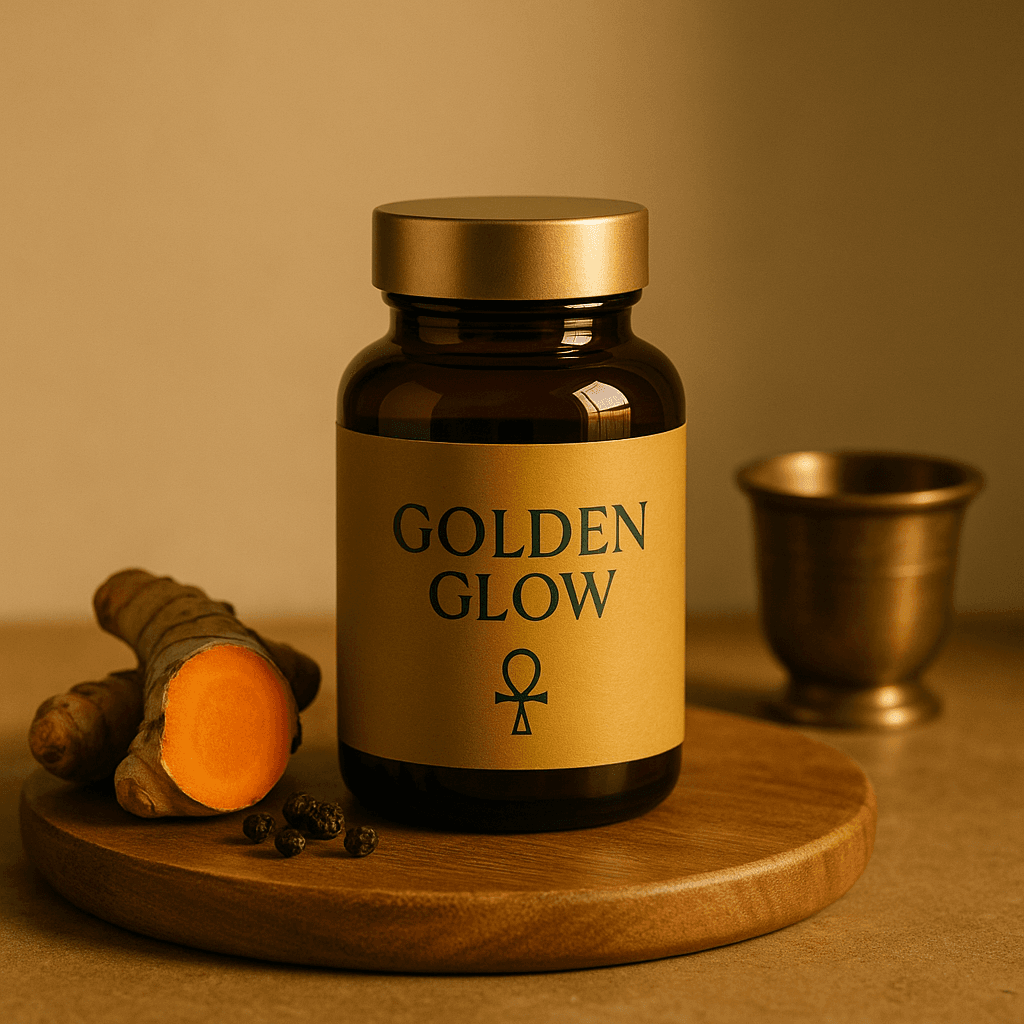
This is where the science meets the supplement shelf. Golden Glow was formulated specifically around the pharmacokinetic and mechanistic principles outlined above:
500 mg Meriva Curcumin Phytosome provides the most clinically validated bioavailability-enhanced curcumin, with 8-29x higher plasma levels documented in pharmacokinetic studies. The phytosome complex means you are getting meaningful systemic curcuminoid delivery, not just milligrams on a label.
10 mg BioPerine (piperine) adds metabolic enzyme inhibition as a complementary absorption strategy, slowing the hepatic and intestinal breakdown that would otherwise clear curcuminoids from circulation.
100 mg Ginger Extract contributes anti-inflammatory and analgesic activity through shared and unique inflammatory pathways, with particular relevance for muscle soreness and menstrual comfort.
200 mg Boswellia Serrata covers the 5-LOX/leukotriene branch of inflammation that curcumin does not primarily target, creating a broader anti-inflammatory profile for joint and whole-body support.
The formulation logic is straightforward: maximize the amount of curcumin that actually reaches your bloodstream, then broaden the anti-inflammatory coverage with complementary botanicals that have their own clinical evidence base. Take it with a meal that includes some dietary fat for best absorption.
Safety, Drug Interactions, and Practical Guidance
Curcumin has a strong overall safety profile in clinical trials, with mild gastrointestinal discomfort (nausea, bloating) as the most commonly reported side effect, typically occurring in fewer than 10% of participants. Long-term studies up to eight months show sustained tolerability without liver or kidney toxicity. That said, there are several interactions that warrant attention.
Anticoagulant Medications (Warfarin, Blood Thinners)
Curcumin has intrinsic antiplatelet properties. A clinical interaction study using Meriva found that it did not significantly alter INR values in stable patients on warfarin or antiplatelet medications at typical supplemental doses. However, clinical guidelines from major anticoagulation centers advise caution, particularly with high-dose curcumin and with formulations containing piperine.
Piperine inhibits CYP2C9, the enzyme that metabolizes warfarin. This can increase warfarin plasma concentrations and theoretically raise bleeding risk. If you take warfarin or other anticoagulants, talk to your anticoagulation clinic before starting curcumin, and ask about more frequent INR monitoring during the first few weeks.
Diabetes Medications
Curcumin has demonstrated blood glucose-lowering effects in clinical trials, which is a benefit for many women but creates a potential additive hypoglycemia risk when combined with insulin, sulfonylureas, or metformin. This does not mean you cannot take curcumin alongside diabetes medication, but it does mean you should monitor blood glucose more closely when starting supplementation and report any episodes of unusual dizziness, sweating, or confusion to your provider.
NSAIDs
Since curcumin and NSAIDs both inhibit cyclooxygenase pathways, combining them has a theoretical additive effect on both anti-inflammatory activity and GI/bleeding risk. For most people, this is manageable, but if you are taking daily NSAIDs for a chronic condition, mention your curcumin use to your doctor.
The Piperine Factor
This deserves emphasis. Piperine is a potent inhibitor of CYP3A4 (responsible for metabolizing roughly 50% of all pharmaceuticals), CYP2C9, CYP1A2, and P-glycoprotein. By slowing the metabolism of curcumin, it can also slow the metabolism of other compounds in your system. For women taking prescription medications, particularly those with a narrow therapeutic index, it is important to discuss piperine-containing supplements with a pharmacist or physician.
Practical Absorption Tips
- Take with a meal containing fat. All curcumin formulations show improved absorption when taken with dietary fat. Avocado, olive oil, nuts, or eggs alongside your supplement can make a measurable difference.
- Consistency matters. Some clinical benefits, particularly for PMS and joint discomfort, show progressive improvement over 4-8 weeks of daily use.
- Separate from medications. If you take prescription medications, spacing your curcumin supplement at least 2-4 hours from other pills reduces the chance of absorption-level interactions.
The Bottom Line
Curcumin's bioavailability problem is real, but it has been substantially solved by modern formulation science. The key takeaways:
- Standard turmeric powder and unformulated curcumin deliver less than 2% of curcuminoids to your bloodstream. Dose does not compensate for poor absorption.
- Phytosome technology (Meriva) produces 8-29x higher plasma levels through phospholipid complexation, with the largest clinical trial database of any enhanced curcumin formulation.
- Piperine (BioPerine) slows curcumin metabolism with a realistic enhancement range of 2-10x, and works through a complementary mechanism to phytosome absorption.
- Clinical evidence supports curcumin for joint comfort (comparable to NSAIDs in some OA trials), metabolic support in PCOS (significant fasting glucose reduction), menstrual symptom management (reduced PMS and pain scores), and emerging benefits during perimenopause.
- Ginger and Boswellia extend the anti-inflammatory profile by covering complementary pathways (prostaglandins and leukotrienes) that curcumin does not primarily target.
- Safety is well-established but interactions with anticoagulants, diabetes medications, and other pharmaceuticals are clinically relevant, especially in piperine-containing formulations.
The science of curcumin absorption is no longer a barrier. The question is whether your formulation reflects that science.
This content is for informational purposes only and does not constitute medical advice. Always consult a qualified healthcare provider before starting any new supplement regimen, especially if you take prescription medications.