You buy a probiotic. You take it every day. You wait. Eventually the bottle ends up in the back of the cabinet.
There is a straightforward reason a single-ingredient probiotic can feel underwhelming. Most probiotic supplements address one half of the colonization equation: they introduce beneficial bacteria. What they do not address is the environment those bacteria are entering.
Multi-ingredient formulas take a different angle. They combine multi-strain probiotics with microbiome-balancing botanicals and an absorption enhancer, on the rationale that the strains and the environment should be supported at the same time rather than one at a time. It is worth being precise about the status of that rationale up front: it rests on the complementary mechanisms of the individual ingredients, not on trials of the finished combination. More on that below.
Why "Just Add Bacteria" Is Only Half the Picture
Your gut microbiome is an ecosystem, not an empty room waiting to be furnished. Hundreds of bacterial species compete for food, for attachment sites on the intestinal wall, and for the right to stay. A probiotic supplement drops new arrivals into an established community where the available ecological niches may already be occupied.
This is why formulators care about genus diversity rather than strain count alone. Combining strains across multiple genera — Bifidobacterium, Saccharomyces, Bacillus, Lactobacillus — provides broader functional coverage than a single-strain product, because each genus occupies distinct niches in the gastrointestinal tract. That reduces competitive exclusion and increases the probability of successful colonization.
The environment matters too. Butyrate, a short-chain fatty acid produced when beneficial bacteria ferment fiber, is the primary energy source for the cells lining the colon and is required for tight junction protein expression — the protein complexes that regulate what passes across the intestinal barrier. A microbial community low in fiber-fermenting species is therefore also a community with less of the fuel the gut lining depends on.
Garlic: Microbiome-Balancing and Prebiotic at Once
Garlic has been used across cultures for thousands of years, and research has identified allicin — the sulfur compound produced when garlic is crushed — as its primary bioactive.
What makes garlic interesting in a gut health context is that it appears to work in two directions at once. Research shows allicin treatment significantly improved gut microbiota composition, with enrichment of Bifidobacterium and Lactobacillus populations — precisely the genera that probiotic supplementation aims to support. Separately, garlic's fructan carbohydrates function as prebiotics that selectively feed beneficial bacteria.
That dual role is uncommon among botanicals: garlic supports a shift in the microbial balance while also feeding the organisms on the favorable side of it. Standardization to 1% allicin is what makes the dose consistent from capsule to capsule, rather than varying the way raw garlic preparations do.
Grapefruit Seed Extract: A Complementary Botanical
Grapefruit seed extract (GSE) contributes a different mechanism. In laboratory testing, GSE disrupts bacterial membrane integrity, with effects observed within 15 minutes of contact. In animal models, GSE has been shown to modulate gut microbiota composition in a way that supports colonization resistance.
GSE also comes with the largest caveat of any ingredient in this category, and it is worth stating plainly: the evidence is moderate, and there is genuine controversy about which compounds are actually responsible for the activity seen in commercial preparations. Extraction method and standardization matter more here than for most botanicals.
Turmeric: Supporting the Gut Environment
Curcumin, the primary bioactive in turmeric, modulates NF-kB-mediated inflammatory signaling in the gut lining. It may also do something more directly microbial: a double-blind, randomized, placebo-controlled pilot study found that subjects taking curcumin displayed an average 69% increase in detected species of gut bacteria compared to placebo, suggesting curcumin may act as a prebiotic-like modifier of microbial diversity. That is a small early-stage finding rather than a settled result, and it has not been confirmed in larger trials.
The persistent challenge with curcumin is bioavailability. In standard preparations, less than 2% of ingested curcuminoids reach systemic circulation. This is where piperine — the alkaloid in black pepper extract, sold in standardized form as BioPerine — comes in. It inhibits the glucuronidation enzymes that would otherwise clear curcuminoids rapidly.
The number usually quoted for that effect deserves scrutiny. The landmark Shoba et al. study reported a 2,000% (20-fold) increase in curcumin bioavailability when 2 g of curcumin was co-administered with 20 mg of piperine. More recent pharmacokinetic work has not consistently reproduced it: an independent crossover study in nine healthy men found no significant benefit from adding piperine, and a study using 5 mg of piperine found roughly a 2-fold increase. The honest reading is that the effect is real but variable — likely in the 2- to 10-fold range rather than the often-cited 20-fold — and that phospholipid (phytosome) complexes currently have the larger clinical database, at higher cost per dose.
One nuance cuts the other way for gut-focused formulas: higher plasma curcumin does not automatically mean greater effect, and for gastrointestinal purposes the local concentration in the gut may matter more than the systemic level.
Folate: Fuel for a Fast-Renewing Gut Lining
Enterocytes are among the fastest-dividing cells in the body, with complete mucosal renewal occurring roughly every 3–5 days. That proliferative demand requires substantial folate for DNA synthesis, repair, and methylation, and folate also governs the methylation patterns that direct proper differentiation of the cell types making up the intestinal barrier. It is an unglamorous ingredient that supports the machinery the rest of the formula depends on.
How the Parts Fit Together
These are not sequential phases and there is no preparatory protocol to follow — everything happens in parallel, in one daily capsule:
Populate. Strains across four genera cover distinct regions, from the small intestine (L. acidophilus, L. rhamnosus) through the large intestine (B. bifidum), with acid-resistant organisms (S. boulardii, B. coagulans) improving the odds of surviving transit.
Protect. Garlic allicin, grapefruit seed extract, and turmeric curcuminoids provide botanical support for microbial balance and a comfortable gut environment, while garlic's prebiotic fructans feed the beneficial populations.
Potentiate. Piperine improves curcumin absorption, and folate supports the cellular turnover that maintains the gut lining.
What the Evidence Does and Does Not Show
This matters more than any single ingredient claim, so it gets its own section.
Each ingredient above has meaningful evidence on its own. The specific combination of all of these components in a single formulation has not been studied in randomized controlled trials. The multimodal rationale is built on complementary mechanisms and non-overlapping biological targets, not on direct combination studies.
Broken down by ingredient: multi-strain probiotic evidence is the strongest of the group; the turmeric–piperine interaction is well characterized; garlic's effects on microbiota composition are documented; grapefruit seed extract sits at moderate evidence with the active-compound controversy noted above; and folate's role in gut epithelial maintenance is well-established biochemistry rather than a supplement-specific finding.
Anyone describing the finished formula as "clinically proven" is telling you more than the literature supports.
What to Look For
Multi-strain, multi-genus. Meta-analyses find that multi-strain combinations produce larger effect sizes than single-strain products. Look for coverage across at least three genera, including shelf-stable organisms such as Saccharomyces boulardii (a yeast) or Bacillus coagulans (a spore-former).
Standardized botanicals. Raw herb powders vary widely in potency. Garlic should be standardized to allicin content; GSE should specify extraction method.
A stated absorption approach for curcumin. Piperine is the most affordable and most widely used option, with real but variable effects. Phytosome formulations have the more extensive clinical documentation. Either way, the product should say which approach it uses rather than listing turmeric alone.
Shelf stability. Spore-forming B. coagulans and yeast-based S. boulardii survive storage and gastric transit without refrigeration, which provides insurance against potency loss on the shelf.
Taken with food. Food improves survival of acid-sensitive strains and improves absorption of curcumin, which is fat-soluble.
Who Might Consider This Approach
After a period of microbiome disruption. Travel, dietary changes, or stretches of high stress can all reduce microbial diversity — psychological stress in particular affects intestinal barrier function through cortisol-mediated pathways.
Occasional bloating or digestive discomfort. A multi-ingredient approach offers several angles of everyday digestive support where a single-mechanism supplement addresses only one. Persistent or severe digestive symptoms are a reason to see a clinician, not to change supplements.
If a single-strain probiotic did nothing noticeable. The strains may not have been the limiting factor; the environment they entered may have been.
On timing expectations: where digestive comfort improvements are reported, they typically emerge within 1–2 weeks, and fuller effects on microbial balance may take 4–8 weeks of consistent use.
Safety and Interactions
This combination is not right for everyone, and two categories deserve specific attention.
If you take medications. Curcumin has intrinsic antiplatelet activity, and garlic extract may add to blood-thinning effects; anyone on warfarin or other anticoagulants should tell their anticoagulation clinic before starting, as more frequent INR monitoring may be advised. Piperine is a potent inhibitor of CYP3A4, CYP2C9, and CYP1A2, so it can raise levels of many common medications — this is a property of the ingredient, not a side effect of a particular brand. Curcumin and levothyroxine should be separated by at least four hours. Curcumin has also shown glucose-lowering effects, which is relevant to anyone on diabetes medication, and people undergoing cancer treatment should not take curcumin without oncologist approval.
If your immune system is compromised. Probiotics are generally regarded as safe for healthy adults, but immunocompromised individuals, critically ill patients, people with a central venous catheter, and people with structural heart disease should consult a healthcare provider before use. S. boulardii specifically carries a documented fungemia risk in patients with central venous catheters.
The Bottom Line
Probiotics are not wrong — they are incomplete. Adding beneficial bacteria is a reasonable strategy, but the environment those bacteria enter shapes what happens next: the microbial balance they arrive into, the comfort of the gut lining, and the cellular renewal that maintains the barrier.
A multi-ingredient formula addresses both halves at once. That is a mechanistic argument, not a clinical one, and it should be evaluated as such.
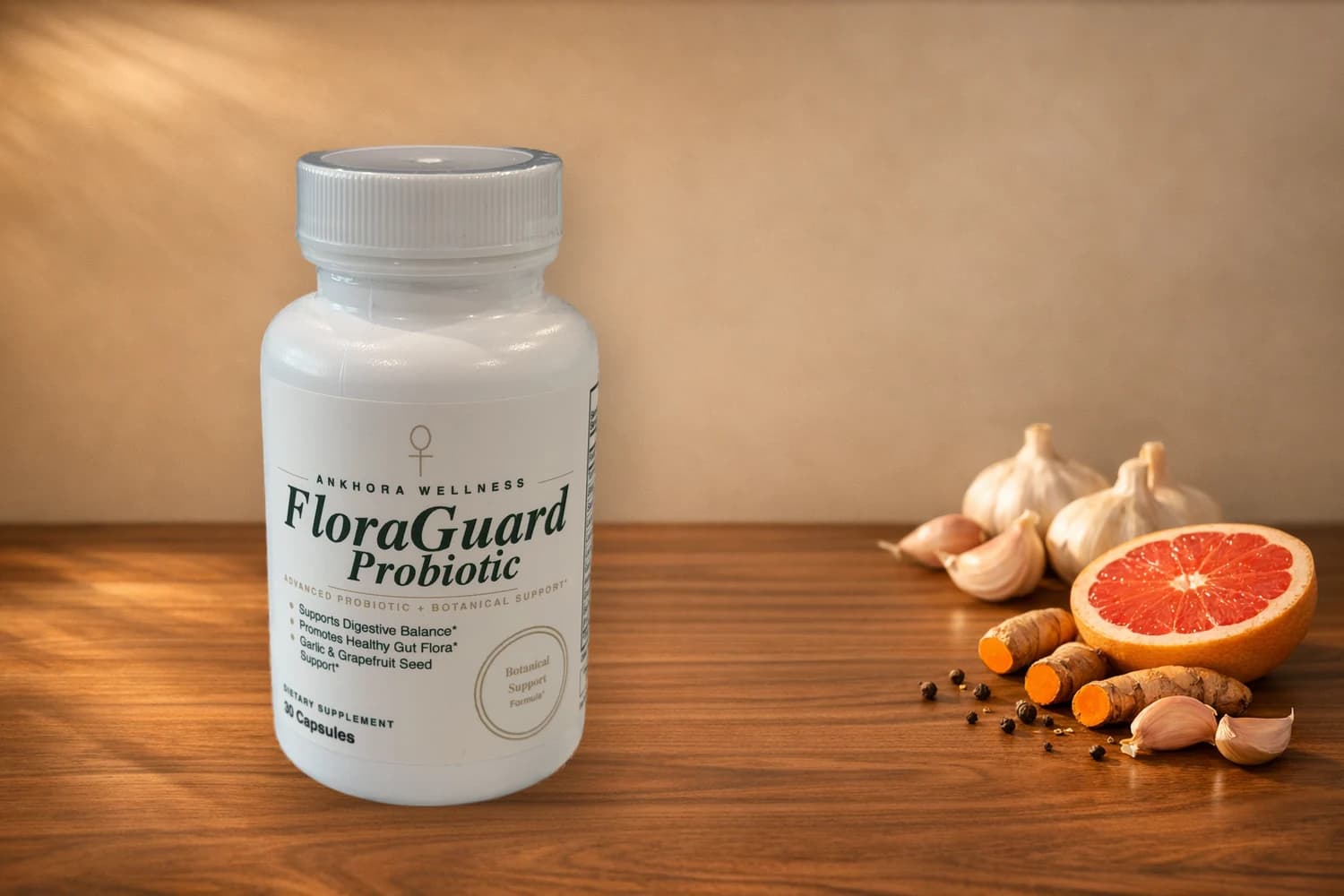
FloraGuard Probiotic is built on this rationale — garlic, grapefruit seed extract, turmeric with BioPerine, folate, and five probiotic strains across four genera, in one shelf-stable daily capsule.
These statements have not been evaluated by the Food and Drug Administration. This product is not intended to diagnose, treat, cure, or prevent any disease. This content is for informational purposes only and does not constitute medical advice. Always consult a qualified healthcare provider before starting any new supplement regimen.