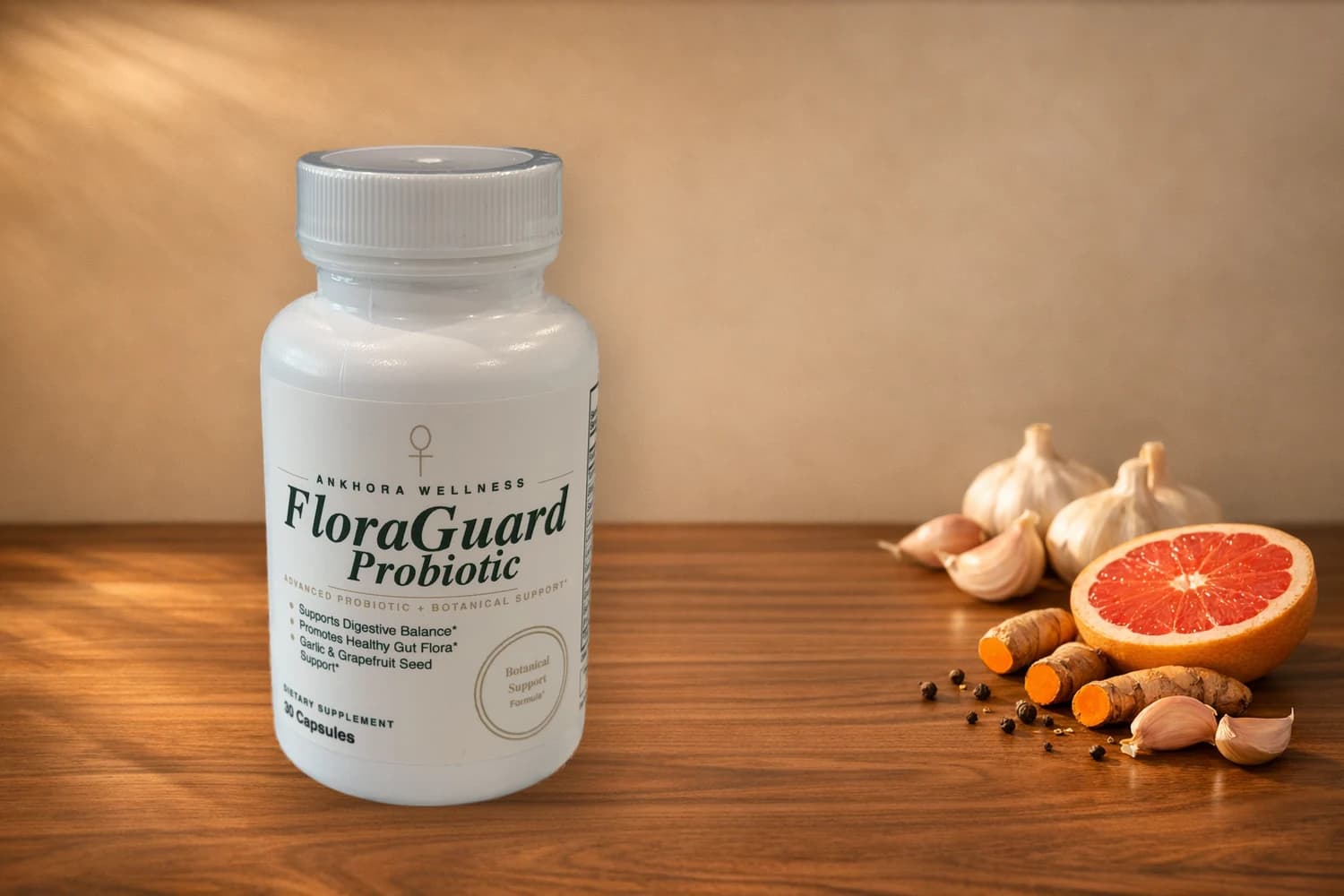
Garlic has been used medicinally for thousands of years. Ancient Egyptian medical texts prescribed it for infections. Hippocrates recommended it for respiratory conditions. Roman soldiers consumed it before battle, believing it conferred strength and resilience.
What these historical traditions could not explain, modern biochemistry now can. The compound responsible for garlic's antimicrobial properties -- allicin -- has been extensively studied in laboratory and clinical research. And what makes allicin particularly interesting for gut health is not just that it kills harmful bacteria. It is that it appears to do so selectively, impacting pathogenic organisms while largely sparing the beneficial species your gut ecosystem depends on.
This selectivity is what makes garlic a compelling ingredient in probiotic formulations. Rather than sterilizing the gut environment the way a broad-spectrum antibiotic might, allicin may help shift the competitive balance in favor of the microbes you actually want to thrive.
How Allicin Works: The Biochemistry
Allicin (diallyl thiosulfinate) is not present in intact garlic. It is produced when the enzyme alliinase comes into contact with the substrate alliin -- which happens when garlic cells are crushed, chopped, or chewed. This enzyme-substrate reaction generates allicin as a defensive compound that protects the garlic bulb against soil-borne pathogens and insects.
The Mechanism of Antimicrobial Action
Allicin exerts its antimicrobial effects primarily through interaction with thiol-containing enzymes in microbial cells. Thiol groups (sulfur-hydrogen bonds) are essential for many enzymatic processes that bacteria depend on for survival. Allicin reacts with these thiol groups, disrupting enzymatic function and ultimately compromising microbial cell integrity.
This mechanism is fundamentally different from how conventional antibiotics work. Most antibiotics target specific cellular structures (cell walls, ribosomes, DNA gyrase) through highly targeted mechanisms. Allicin's thiol reactivity is broader in its biochemical action but -- somewhat counterintuitively -- more selective in its ecological impact.
Why the Selectivity?
The selectivity of allicin against pathogenic versus beneficial bacteria appears to relate to differences in antioxidant defense systems between bacterial species. Beneficial gut bacteria, particularly Lactobacillus and Bifidobacterium species, have evolved robust enzymatic defenses against reactive sulfur compounds. These species have long co-existed with the Allium plants that produce allicin-like compounds in natural ecosystems.
Pathogenic bacteria, particularly those that are not part of the normal human gut microbiome -- like certain strains of E. coli, Staphylococcus, and Clostridium -- tend to have less robust defenses against thiol-reactive compounds. The result is that allicin at concentrations found in supplemental garlic extract can significantly reduce pathogenic populations while having minimal impact on beneficial Lactobacillus and Bifidobacterium colonies.
This is not absolute selectivity. At very high concentrations, allicin affects all bacteria. But at the concentrations relevant to supplemental use, the differential impact is meaningful.
Garlic and the Gut Microbiome: What Research Shows
Prebiotic Effects Beyond Antimicrobial Action
Garlic's benefits for the gut microbiome extend beyond allicin's antimicrobial properties. Garlic contains fructooligosaccharides (FOS) and inulin -- prebiotic fibers that serve as fuel for beneficial gut bacteria, particularly Bifidobacterium species. When beneficial bacteria ferment these fibers, they produce short-chain fatty acids (SCFAs) like butyrate, which nourish intestinal epithelial cells and support gut barrier integrity.
This dual action -- antimicrobial activity against pathogens plus prebiotic support for beneficials -- means garlic acts on both sides of the microbial balance equation simultaneously.
Effects on Gut Barrier Function
Research has demonstrated that garlic compounds may support intestinal barrier function through multiple mechanisms. By reducing pathogenic bacterial populations that produce barrier-disrupting toxins, allicin indirectly supports tight junction integrity. The SCFAs produced by prebiotic fermentation of garlic fibers directly nourish the intestinal epithelial cells responsible for maintaining the barrier.
When the gut barrier is functioning properly, it prevents bacterial lipopolysaccharides (LPS) from crossing into the bloodstream, where they would trigger systemic inflammation. This is relevant not just for digestive comfort but for cognitive function (brain fog is strongly associated with gut-derived systemic inflammation), hormonal balance, and immune regulation.
Anti-Inflammatory Properties
Beyond its antimicrobial effects, allicin demonstrates anti-inflammatory properties that may benefit the intestinal environment. Chronic low-grade inflammation in the gut damages the mucus layer that protects epithelial cells, disrupts microbial habitats, and creates conditions that favor pathogenic colonization.
By reducing intestinal inflammation, garlic compounds may help create a more hospitable environment for beneficial bacteria -- making it easier for probiotic strains to establish stable colonies rather than passing through without colonizing.
Garlic as a Probiotic Complement
The concept of combining antimicrobial botanicals with probiotic bacteria might seem contradictory at first. Why would you include a compound that kills bacteria in a formula designed to introduce beneficial bacteria?
The answer lies in the selectivity described above, and in a ecological principle that governs all microbial communities: competitive exclusion.
The Competitive Exclusion Principle
Your gut ecosystem has a finite number of ecological niches -- attachment sites on the intestinal wall, access to nutrients, and positions within the biofilm communities that line your intestines. These niches are not empty. They are occupied by the microbes currently present, whether beneficial or pathogenic.
When you take a probiotic supplement, you are introducing organisms into a fully occupied ecosystem. If pathogenic species hold key ecological positions, the newcomers have nowhere to establish themselves. They pass through your digestive tract without colonizing, and you get none of the long-term benefits.
By selectively reducing pathogenic populations, allicin may open up ecological niches that probiotic strains can then colonize. Think of it as clearing invasive species from a garden before planting the flowers you actually want to grow. The clearing step makes the planting step more effective.
Timing and Formulation Considerations
In a combination supplement like FloraGuard, garlic extract and probiotic strains coexist in the same formulation. This works because of the selectivity principle: at supplemental concentrations, allicin primarily impacts pathogenic species, not the Lactobacillus, Bifidobacterium, and Bacillus strains in the formula.
Additionally, many probiotic formulations use acid-resistant capsule technology or spore-forming strains (like Bacillus coagulans) that provide additional protection. Bacillus spores are inherently resistant to a wide range of antimicrobial compounds, including allicin, meaning they arrive in the intestines fully viable regardless of what other compounds are present in the formula.
Traditional Use Meets Modern Evidence
Garlic in Traditional Medicine Systems
Garlic's use as a digestive remedy spans virtually every major traditional medicine system. Ayurvedic medicine uses garlic for digestive "fire" (agni) support. Traditional Chinese Medicine classifies garlic as a warming food that disperses stagnation in the digestive tract. European folk medicine prescribed raw garlic for intestinal parasites and digestive infections.
These traditional applications align remarkably well with what modern research has confirmed about allicin's antimicrobial selectivity and garlic's prebiotic effects. Traditional healers observed the outcomes without understanding the mechanisms. Modern science has provided the mechanisms that explain the outcomes.
From Kitchen Ingredient to Standardized Extract
The challenge with dietary garlic is consistency. Allicin content varies significantly with garlic variety, growing conditions, storage, and preparation method. Cooking destroys allicin within minutes. Even raw garlic provides variable allicin doses depending on how thoroughly the cloves are crushed and how quickly they are consumed after crushing.
Standardized garlic extract addresses this variability by providing consistent allicin potential per dose. This standardization is important for any therapeutic application, because the selective antimicrobial effect depends on reaching appropriate concentrations consistently.
Safety Considerations
Garlic is generally well-tolerated as a dietary component and as a standardized supplement. However, there are important considerations.
Digestive Sensitivity
Some individuals experience digestive discomfort from garlic, particularly at higher doses. Starting with lower doses and increasing gradually can help identify your tolerance. Enteric-coated or delayed-release formulations may reduce upper GI irritation.
Drug Interactions
Garlic has mild anticoagulant properties. If you are taking blood-thinning medications (warfarin, aspirin, clopidogrel), discuss garlic supplementation with your healthcare provider. Garlic may also interact with certain HIV medications (saquinavir) by affecting drug metabolism.
Surgical Considerations
Due to its mild blood-thinning effects, most healthcare providers recommend discontinuing garlic supplements two weeks before scheduled surgery. This is a precautionary measure -- the clinical significance of garlic's anticoagulant effects at supplemental doses is debated, but erring on the side of caution is appropriate for surgical settings.
Practical Applications
Choosing the Right Form
For gut microbiome support, look for garlic extract with standardized allicin content or allicin potential. Products that specify allicin yield per dose provide more predictable effects than those that simply list garlic extract weight.
In a comprehensive gut defense formula like FloraGuard, garlic extract is combined with complementary botanicals (grapefruit seed extract, turmeric) and multi-strain probiotics. This combination addresses multiple aspects of gut ecology simultaneously -- antimicrobial rebalancing, anti-inflammatory support, and beneficial bacterial colonization.
Pairing With Probiotics for Best Results
If you take garlic and probiotics as separate supplements, timing matters less than you might think. The selectivity of allicin means that taking garlic alongside Lactobacillus and Bifidobacterium probiotics is unlikely to significantly impact probiotic viability. However, some practitioners recommend separating antimicrobial supplements from probiotics by 2-3 hours as an additional precaution.
Combination formulations that include both garlic extract and probiotic strains in a single product have been designed with this interaction in mind, using strains and concentrations that work together rather than against each other.
Dietary Garlic as a Foundation
Supplemental garlic extract complements, but does not replace, dietary garlic consumption. Regular dietary garlic provides prebiotic fibers (FOS and inulin) that feed beneficial gut bacteria, plus a range of organosulfur compounds beyond allicin that support digestive and immune health.
Including 1-2 cloves of raw or lightly cooked garlic daily -- crushed and allowed to sit for 10 minutes before cooking to maximize allicin formation -- provides a dietary foundation that supplemental garlic extract can build upon.
The Bigger Picture: Antimicrobial Botanicals in Modern Gut Health
Garlic represents a broader category of antimicrobial botanicals that traditional medicine systems have used for digestive support for millennia. What makes these compounds increasingly relevant to modern supplementation is the growing understanding that gut health is not just about adding beneficial bacteria -- it is about managing the entire ecosystem.
The combination of selective antimicrobial activity with prebiotic support and anti-inflammatory properties makes garlic one of the most versatile ingredients in a gut health formulation. It does not replace probiotics. It makes them more effective by helping create the ecological conditions they need to succeed.
The information in this article is for educational purposes and is not intended to diagnose, treat, cure, or prevent any disease. Consult your healthcare provider before starting any new supplement regimen, especially if you take blood-thinning medications.