Stress is not a single event in your body. It is a cascade that unfolds across at least two major biological systems simultaneously -- and most supplement strategies only address one of them.
Adaptogens like ashwagandha modulate your hormonal stress response from the top down, helping regulate cortisol output through the hypothalamic-pituitary-adrenal (HPA) axis. Probiotics work from the bottom up, restoring the gut microbial populations that chronic stress systematically damages and supporting the gut-brain communication channels that influence how you feel moment to moment.
These are not redundant approaches. They are complementary ones. And a growing body of research suggests that addressing both pathways simultaneously may produce something neither can achieve alone: durable stress resilience that holds up under real-world conditions.
Two Stress Pathways, One Problem
When you experience chronic stress -- whether from work pressure, sleep disruption, caregiving demands, or the cumulative weight of daily life -- your body responds through two interconnected but distinct systems.
The HPA Axis: Your Hormonal Alarm System
Your hypothalamic-pituitary-adrenal axis is the classical stress response pathway. When your brain perceives a threat, your hypothalamus signals your pituitary gland, which signals your adrenal glands to release cortisol. In acute situations, this system is adaptive. Cortisol sharpens focus, mobilizes energy, and prepares you to respond.
The problem emerges when this system stays activated chronically. Sustained cortisol elevation disrupts sleep architecture, impairs memory consolidation, promotes visceral fat storage, and creates a state of physiological hypervigilance that your body was never designed to maintain long-term. Over time, the HPA axis itself can become dysregulated -- either remaining persistently overactive or, in cases of prolonged burnout, becoming blunted and unresponsive.
The Gut-Brain Axis: Your Microbial Communication Network
Simultaneously, chronic stress reshapes your gut microbiome in measurable ways. Elevated cortisol increases intestinal permeability, shifts microbial populations away from beneficial species, and reduces the production of short-chain fatty acids that healthy gut bacteria normally generate. This matters because your gut communicates directly with your brain through the vagus nerve -- a neural highway composed predominantly of sensory fibers that relay microbial signals from your enteric nervous system to your brainstem.
Research has established that this communication is bidirectional. Stress damages your gut environment, and your damaged gut environment sends distress signals back to your brain, amplifying the stress response. The vagus nerve carries these signals through multiple mechanisms: neurotransmitter production (approximately 90% of your body's serotonin is synthesized in the gut), inflammatory cytokine signaling, and direct neural activation.
The Gap in Single-Pathway Strategies
Here is the practical problem that most supplement approaches fail to address. An adaptogen like ashwagandha can help regulate cortisol output, but it does not directly restore the gut microbial populations that stress has disrupted. A probiotic can help rebalance your microbiome, but it does not directly modulate the HPA axis hormones driving the disruption.
Targeting only one pathway and hoping the other resolves on its own is not always a reliable strategy.
Adaptogens: Regulating the Stress Response From the Top Down
Ashwagandha (Withania somnifera) is among the most extensively studied adaptogenic herbs in modern clinical research. Its primary bioactive compounds -- withanolides, including withaferin A and withanone -- modulate the HPA axis, GABAergic signaling, and inflammatory pathways through multiple mechanisms.
What the Clinical Evidence Shows
A 2025 systematic review and meta-analysis pooling nine studies with 558 participants found that ashwagandha supplementation significantly reduced cortisol levels, perceived stress scores, and Hamilton Anxiety Rating Scale scores compared to placebo. A separate meta-analysis confirmed a statistically significant reduction in serum cortisol.
The landmark Chandrasekhar trial demonstrated that 300 mg of KSM-66 ashwagandha extract twice daily for 60 days produced a 44% reduction in perceived stress scores compared to 5.5% in the placebo group. Serum cortisol dropped by nearly 28%.
A 2024 systematic review found that ashwagandha significantly reduced anxiety scores with a large effect size (SMD: -1.55). Most positive trials achieved these results at doses of 300-600 mg daily.
L-Theanine: Complementing the Adaptogenic Profile
L-Theanine, an amino acid found naturally in green tea, complements ashwagandha through a distinct mechanism. Rather than modulating cortisol, L-Theanine promotes alpha brain wave activity -- the electrical pattern associated with relaxed alertness. Research suggests it enhances GABA, serotonin, and dopamine levels without causing drowsiness.
Where ashwagandha provides broad HPA axis regulation, L-Theanine targets the cognitive dimension of stress: racing thoughts, scattered attention, and mental fatigue. Together, they address both the hormonal and neurological components of the top-down stress response. This is the rationale behind formulations like Solace Biome, which combines adaptogenic and psychobiotic ingredients.
Probiotics: Rebuilding From the Ground Up
While adaptogens work on your hormonal stress machinery, specific probiotic strains target the gut-brain communication that stress disrupts.
Psychobiotic Strains and Stress Response
Certain probiotic strains -- now classified as "psychobiotics" -- have demonstrated the ability to influence mood and stress responses through the gut-brain axis. Lactobacillus helveticus R0052 and Bifidobacterium longum R0175 have been studied in combination and shown to reduce stress-related gastrointestinal symptoms and anxiety-adjacent behaviors in clinical trials.
Lactobacillus rhamnosus JB-1 has produced reductions in stress-induced corticosterone (the rodent equivalent of cortisol) and anxiety-like behavior in preclinical research. The mechanism appears to involve direct vagal nerve signaling -- when researchers severed the vagus nerve in animal models, the anxiolytic effects of the probiotic disappeared entirely.
Multi-Strain Coverage for Resilient Colonization
Individual probiotic strains, no matter how well-studied, can only occupy one ecological niche in your gut. Your native microbiome contains hundreds of species across dozens of genera, each colonizing different regions, producing different metabolites, and interacting with different components of your immune system.
Meta-analyses comparing single-strain and multi-strain formulations consistently find that multi-strain combinations produce larger effect sizes for digestive health outcomes. Multi-strain products show more reliable results across diverse patient populations, likely because they provide broader ecological coverage and redundancy.
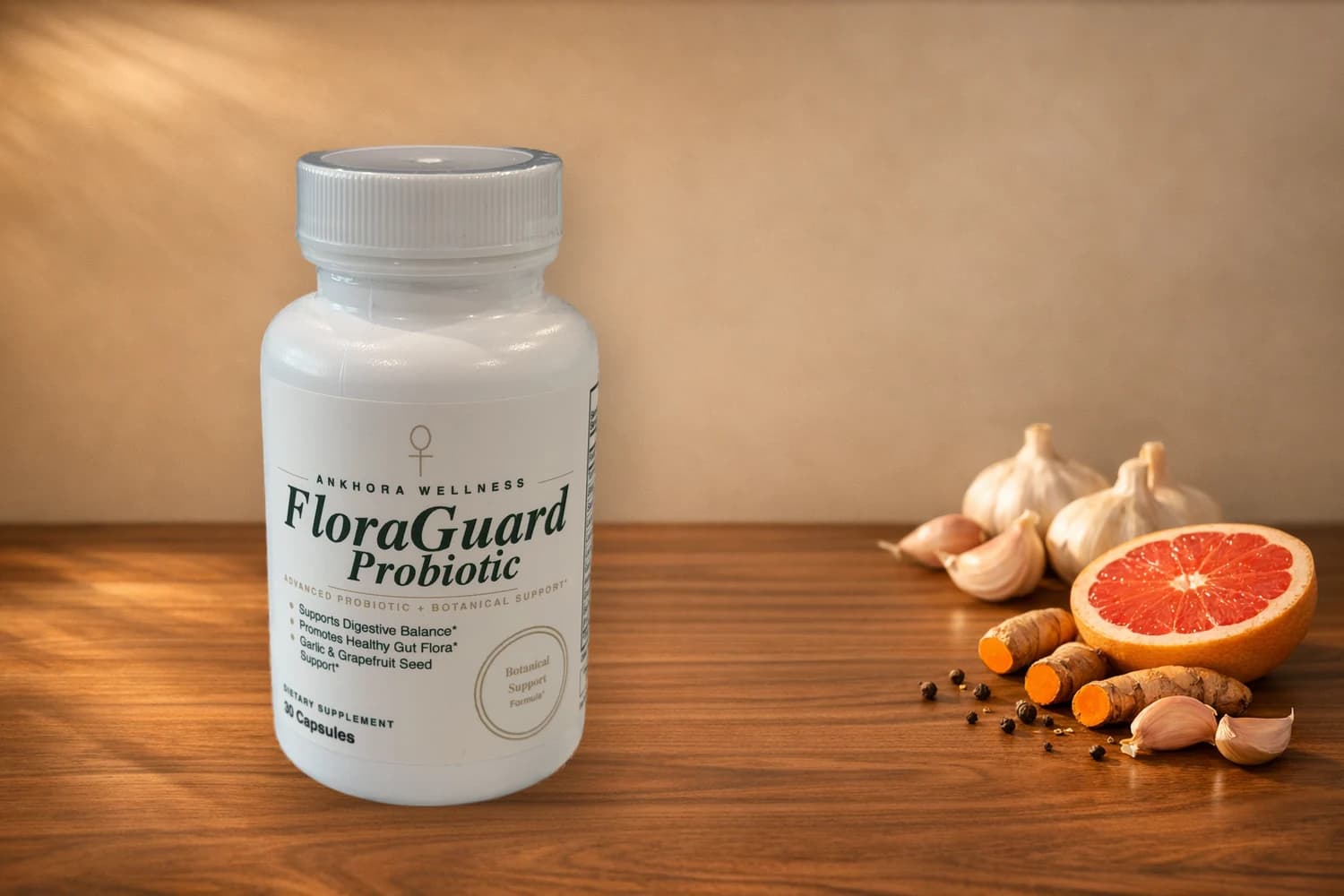
This is why broad-spectrum formulations like FloraGuard include multiple strains from different genera -- Lactobacillus, Bifidobacterium, and Bacillus -- alongside botanical compounds that support the gut environment those strains are colonizing.
The Synergy Thesis: Why Both Pathways Together
The theoretical case for combining adaptogens and probiotics rests on a straightforward biological observation: stress is a feedback loop that operates across both the HPA axis and the gut-brain axis simultaneously. Interrupting only one arm of that loop may leave the other arm free to perpetuate the cycle.
Breaking the Stress-Gut-Stress Cycle
When cortisol remains elevated, it increases intestinal permeability, disrupts microbial populations, and reduces short-chain fatty acid production. These changes send inflammatory and neural signals through the vagus nerve back to the brain, which interprets them as additional stress inputs, further elevating cortisol output. The loop sustains itself.
An adaptogen that lowers cortisol output can reduce the hormonal pressure on the gut environment, giving beneficial bacteria a better chance of establishing stable colonies. A probiotic that restores microbial populations can improve gut-brain signaling, which may reduce the neural stress inputs that keep the HPA axis activated.
Neither intervention addresses the full loop alone. But together, they may interrupt the feedback cycle at two points simultaneously.
Supporting Gut Barrier Integrity Under Stress
Chronic stress increases intestinal permeability through cortisol-mediated disruption of tight junction proteins. This allows bacterial lipopolysaccharides (LPS) to cross the gut barrier into the bloodstream, triggering systemic inflammatory responses that further amplify stress signaling.
Specific probiotic strains, particularly from the Lactobacillus and Bifidobacterium genera, have demonstrated the ability to support tight junction protein expression and reduce markers of gut permeability. Meanwhile, adaptogenic herbs may reduce the cortisol-driven pressure that degrades those tight junctions in the first place.
This dual approach -- reduce the hormonal assault on the gut barrier while simultaneously providing microbial support for barrier maintenance -- may offer more comprehensive protection than either strategy alone.
Building a Practical Stack
If the science behind combining adaptogens and probiotics is compelling to you, here are practical considerations for implementation.
Timing and Sequencing
Many practitioners suggest taking adaptogens with meals (ashwagandha is fat-soluble and absorbs better with dietary fat) and probiotics on a consistent daily schedule. Some evidence suggests morning dosing for adaptogens aligns with the natural cortisol awakening response.
Probiotics can be taken at any consistent time, though some research suggests improved survival through the stomach when taken with a meal or immediately before eating, when stomach acid is buffered by food.
What to Look For in Formulations
For adaptogenic support, look for standardized extracts with specified withanolide content (KSM-66 and Sensoril are among the most clinically validated ashwagandha extracts). For probiotics, prioritize multi-strain formulations with strains that have been studied in human trials, not just in vitro.
Formulations that combine both approaches in a single protocol -- like pairing Solace Biome for adaptogenic and psychobiotic support with FloraGuard for broad-spectrum gut defense -- can simplify the process of addressing both pathways.
Realistic Expectations
Adaptogenic effects on cortisol and perceived stress typically become measurable within 30-60 days of consistent use. Probiotic effects on gut microbial composition can begin within days but may take 4-8 weeks to produce stable, noticeable changes in digestive comfort and mood.
Combining both approaches does not mean instant results. It means building resilience across multiple systems simultaneously, which may produce more durable outcomes over time.
The Bottom Line
Stress resilience is not about suppressing cortisol or simply adding bacteria to your gut. It is about supporting the biological systems that chronic stress degrades -- the HPA axis that controls your hormonal response and the gut-brain axis that influences how you feel moment to moment.
Adaptogens and probiotics target these two systems through fundamentally different mechanisms. Research suggests they are complementary, not redundant. And while more clinical trials specifically studying the combination are needed, the biological rationale for addressing both pathways simultaneously is well-supported by existing evidence on each component individually.
Your body manages stress as an integrated system. A supplement strategy that reflects that integration may serve you better than one that addresses only half the picture.
The information in this article is for educational purposes and is not intended to diagnose, treat, cure, or prevent any disease. Consult your healthcare provider before starting any new supplement regimen.