In the world of gut health supplementation, most of the attention goes to probiotics -- the beneficial bacteria you are adding to your system. Far less attention goes to the question of what happens when those bacteria arrive.
Your gut is not an empty room waiting to be furnished. It is a densely populated ecosystem where hundreds of bacterial species compete for food, attachment sites, and ecological territory. Introducing beneficial strains into this environment is like planting a garden in soil that may already be overrun with weeds. The quality of the soil -- or in this case, the gut environment -- determines whether your new arrivals establish themselves or simply pass through.
This is where botanical defense compounds like grapefruit seed extract (GSE) enter the picture. Not as probiotics themselves, but as environmental modifiers that may help create the conditions beneficial bacteria need to thrive.
What Is Grapefruit Seed Extract?
Grapefruit seed extract is derived from the seeds, membranes, and pulp of grapefruit (Citrus paradisi). The active compounds are primarily polyphenolic flavonoids, including naringenin, hesperidin, and various citrus bioflavonoids. These compounds are concentrated through an extraction and purification process that produces a standardized liquid or powder used in dietary supplements.
GSE gained attention in the 1970s and 1980s when researchers began documenting its antimicrobial properties in laboratory settings. Since then, it has been studied for activity against bacteria, fungi, viruses, and parasites -- making it one of the broader-spectrum botanical antimicrobials available.
Distinguishing GSE from Grapefruit Juice
Grapefruit seed extract is not the same as grapefruit juice and does not carry the same drug interaction risks. The compounds in grapefruit juice that inhibit CYP3A4 enzymes (primarily furanocoumarins like bergamottin) are concentrated in the juice and peel, not in the seeds. While caution is always warranted with any supplement, the specific CYP3A4 interaction profile of GSE differs from that of grapefruit juice.
That said, if you take medications metabolized by CYP3A4 enzymes (including many statins, calcium channel blockers, and immunosuppressants), discuss GSE supplementation with your healthcare provider before starting.
The Antimicrobial Mechanism
How GSE Disrupts Pathogenic Microorganisms
The antimicrobial activity of grapefruit seed extract operates through several mechanisms that distinguish it from conventional antibiotics.
Membrane disruption. GSE compounds interact with bacterial cell membranes, altering their permeability and structural integrity. This disrupts the ability of bacteria to maintain their internal environment, import nutrients, and export waste products. Membrane disruption is a physical mechanism -- it does not rely on the specific enzyme targets that bacteria can evolve resistance to.
Enzyme inhibition. Polyphenolic compounds in GSE inhibit certain bacterial enzymes essential for metabolic function. By interfering with the enzymatic processes bacteria depend on for energy production and growth, GSE can slow or halt microbial proliferation.
Biofilm disruption. Pathogenic bacteria often form biofilms -- structured communities encased in a protective matrix that makes them resistant to both the immune system and conventional antimicrobials. Research suggests that GSE compounds may disrupt biofilm formation and structure, making the organisms within more vulnerable to both the immune system and to competitive displacement by beneficial bacteria.
The Selectivity Question
The most important question about any antimicrobial compound intended for gut health use is: does it kill everything indiscriminately, or does it show selectivity toward pathogenic species?
Research on GSE suggests a pattern of relative selectivity. In laboratory studies, GSE has demonstrated significant activity against common pathogenic organisms -- including Escherichia coli, Staphylococcus aureus, Salmonella typhimurium, and Candida albicans -- at concentrations that showed reduced impact on Lactobacillus and Bifidobacterium species.
The mechanisms behind this selectivity are not fully elucidated, but several hypotheses exist. Beneficial gut bacteria that have co-evolved with plant polyphenols in the human diet may have developed enzymatic defenses against these compounds. Lactobacillus species in particular produce enzymes that metabolize polyphenolic compounds, potentially neutralizing GSE's antimicrobial effects before they can cause damage.
It is important to note that this selectivity is relative, not absolute. At very high concentrations, GSE affects all bacterial species. The selectivity occurs at the concentrations relevant to supplemental use -- which is why formulation and dosing matter.
GSE in Modern Probiotic Formulations
The Ecological Logic
Including an antimicrobial botanical in a probiotic formula seems paradoxical until you understand the ecological dynamics at play. The challenge of probiotic supplementation is not just introducing beneficial bacteria -- it is getting them to colonize.
Your intestinal tract has a limited number of ecological niches: attachment sites on the mucosal surface, access points to prebiotic nutrients, and positions within the biofilm communities that line your intestines. In a healthy gut, these niches are occupied by beneficial species. In a dysbiotic gut -- one disrupted by antibiotics, stress, poor diet, or illness -- many of these niches are occupied by organisms that may not serve your health.
A selective antimicrobial like GSE may help shift the competitive landscape by reducing the populations occupying those niches, creating opportunities for probiotic strains to establish themselves. This is not about sterilizing the gut. It is about ecological management -- modifying the competitive environment to favor the organisms you are intentionally introducing.
Complementary Botanicals: The Multi-Compound Approach
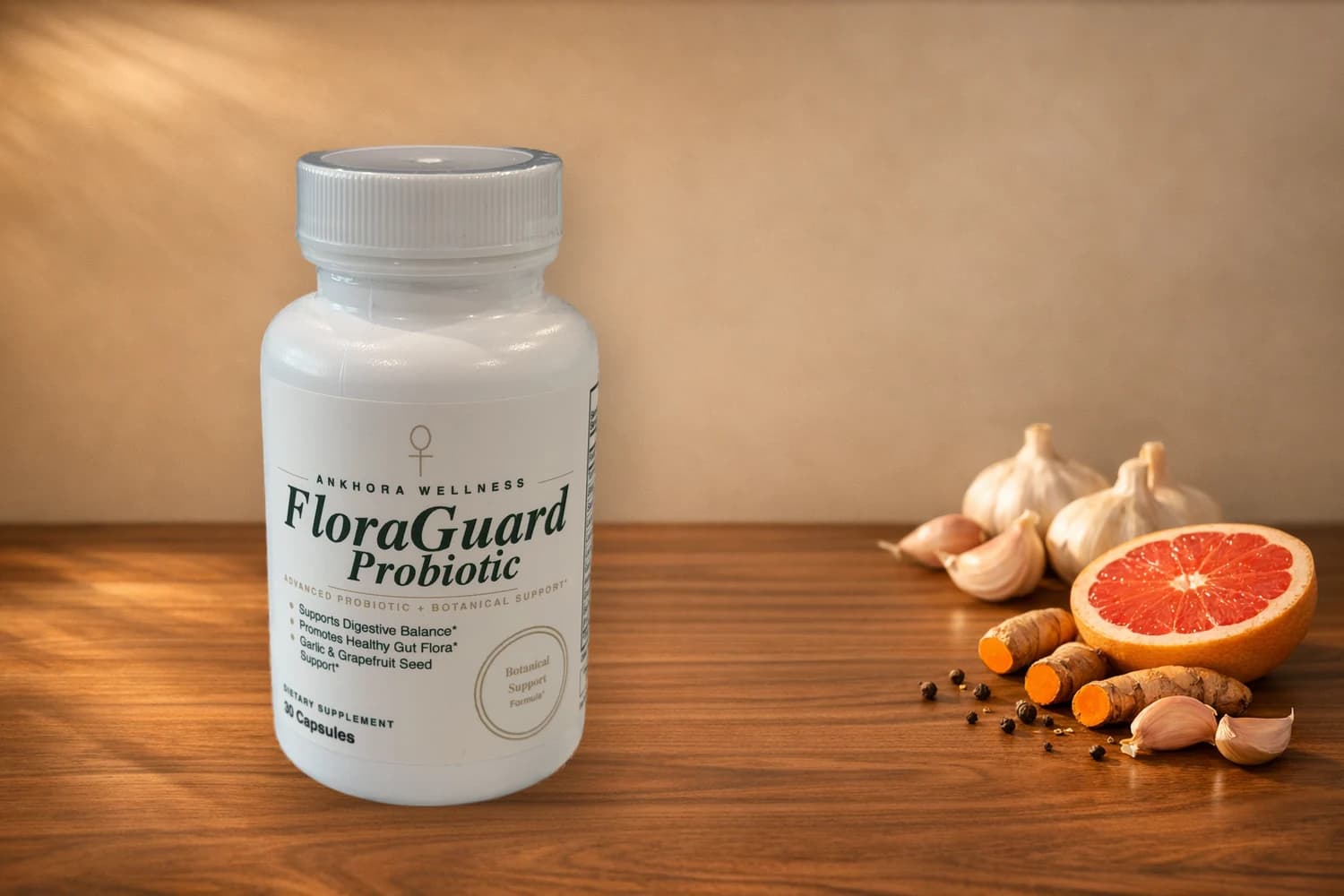
In formulations like FloraGuard, GSE works alongside other botanical compounds that support gut ecology through different mechanisms.
Garlic extract (allicin) provides antimicrobial activity through thiol-reactive chemistry -- a completely different mechanism than GSE's membrane disruption. Using multiple antimicrobial compounds with different mechanisms reduces the likelihood that any single pathogenic species can develop resistance.
Turmeric extract (curcumin) addresses the inflammatory dimension of gut ecology. Chronic intestinal inflammation damages the mucus layer, disrupts tight junctions, and creates conditions that favor pathogenic colonization. By reducing inflammation, curcumin supports the structural environment that beneficial bacteria need for long-term colonization.
BioPerine (piperine) enhances the absorption of curcumin and other compounds, ensuring that the anti-inflammatory and antimicrobial ingredients reach effective concentrations in the gut.
This multi-compound approach reflects the complexity of the gut ecosystem. A single antimicrobial compound, no matter how effective, addresses only one dimension of the challenge. A formulation that combines antimicrobial, anti-inflammatory, and absorption-enhancing compounds alongside multi-strain probiotics addresses the full ecological picture.
What the Research Shows
In Vitro Evidence
Laboratory studies have demonstrated GSE activity against a wide range of pathogenic organisms at concentrations achievable through oral supplementation. Minimum inhibitory concentrations (MICs) for common gut pathogens are generally in the range of 25-200 micrograms per milliliter -- well within the range of what supplemental doses can achieve in the intestinal lumen.
Importantly, MICs for beneficial Lactobacillus and Bifidobacterium species are typically higher, supporting the selectivity hypothesis. These beneficial organisms appear to tolerate GSE concentrations that significantly inhibit pathogenic species.
Antifungal Activity
GSE has demonstrated particular activity against Candida species, including Candida albicans. This is relevant because fungal overgrowth in the gut -- while sometimes overstated in popular health media -- is a genuine concern following antibiotic use, during immunosuppression, and in individuals with impaired gut barrier function.
By addressing both bacterial and fungal pathogenic organisms, GSE provides broader ecological management than compounds that target only bacteria.
Limitations of Current Evidence
It is important to acknowledge the limitations of the current GSE research. Much of the evidence comes from in vitro studies (laboratory studies in cell cultures and controlled environments), which do not perfectly replicate the complex conditions inside the human gut. Human clinical trials specifically evaluating GSE as a gut health intervention are limited in number and scale.
Additionally, some earlier GSE research was complicated by the discovery that certain commercial GSE products contained synthetic antimicrobial preservatives (like benzethonium chloride or triclosan) that were not derived from the grapefruit itself. Modern standardization and quality testing have largely addressed this issue, but it underscores the importance of choosing GSE products from manufacturers that provide third-party testing and full ingredient transparency.
Practical Considerations
Choosing Quality GSE Products
When selecting a supplement containing GSE, look for products from manufacturers that provide:
- Third-party testing for both potency and purity
- Standardized flavonoid content rather than just listing GSE weight
- Absence of synthetic preservatives (benzethonium chloride, triclosan, methylparaben)
- Clear dosage information with per-serving GSE content specified
In combination formulations like FloraGuard, GSE is one component of a multi-ingredient formula, so the dose is calibrated to work synergistically with other botanical and probiotic ingredients rather than as a standalone antimicrobial.
Integration With Probiotic Supplementation
For the ecological benefits of GSE to translate into practical gut health improvements, it needs to be part of a broader strategy that includes:
-
Probiotic diversity. Multi-strain formulations provide the microbial reinforcements needed to colonize the ecological niches that GSE helps open. Without introducing beneficial bacteria, reducing pathogenic populations simply creates a temporary vacuum that may be re-colonized by the same organisms.
-
Prebiotic support. Feeding the beneficial bacteria you are introducing ensures they can outcompete remaining pathogenic organisms over time. Dietary fiber, particularly from garlic, onions, and other prebiotic-rich foods, provides the fuel that probiotic strains need to produce short-chain fatty acids and other beneficial metabolites.
-
Consistency. Ecological shifts in the gut microbiome do not happen overnight. Consistent daily supplementation over weeks allows gradual remodeling of microbial populations, while sporadic use may produce only temporary shifts that revert once supplementation stops.
Who May Benefit Most
GSE-containing probiotic formulations may be particularly relevant for:
-
Women post-antibiotic courses -- antibiotics disrupt the gut ecosystem indiscriminately, and a selective antimicrobial combined with probiotics may help guide the recovery toward beneficial species rather than allowing opportunistic pathogens to recolonize first.
-
Individuals with recurrent digestive complaints -- if past probiotic use has not produced lasting results, the issue may not be the probiotic strains but the gut environment they entered. Adding ecological support may improve colonization success.
-
Those experiencing bloating and gas -- these symptoms often indicate microbial imbalance rather than food intolerance. Addressing the underlying ecological dynamics may resolve symptoms that dietary changes alone have not.
The Botanical Defense Philosophy
Grapefruit seed extract represents a broader principle in modern gut health supplementation: effective microbiome management is not just about adding beneficial organisms. It is about shaping the ecosystem they enter.
Traditional medicine systems understood this intuitively. They paired fermented foods with bitter herbs, combined antimicrobial spices with probiotic preparations, and used cleansing protocols before restoration protocols. Modern formulation science is catching up to this traditional wisdom, now armed with the mechanistic understanding to explain why these combinations work.
The next generation of probiotic formulations -- like FloraGuard -- reflects this understanding. By combining multi-strain probiotics with botanical defense compounds like GSE, garlic extract, and anti-inflammatory turmeric, these formulations address the full ecological challenge of gut health, not just the bacterial introduction step.
Your gut is an ecosystem, and ecosystems respond best to integrated management strategies. A probiotic strain needs the right environment to colonize. A botanical antimicrobial needs replacement organisms to fill the niches it clears. And your gut lining needs anti-inflammatory support to maintain the barrier that keeps the entire system functioning. When these elements work together, each one makes the others more effective.
The information in this article is for educational purposes and is not intended to diagnose, treat, cure, or prevent any disease. Consult your healthcare provider before starting any new supplement regimen, especially if you take prescription medications.