Best Probiotics for Women: Why Strain Specificity Changes Everything
Walk into any supplement aisle and you will see dozens of probiotics marketed to women. Most of them feature soft pink packaging, a bold CFU number on the front, and vague promises about "supporting feminine health." What you almost never see is the one piece of information that actually determines whether a probiotic will work for you: the strain designation.
This is not a minor detail. In the world of probiotics, strain specificity is the difference between a supplement backed by decades of clinical research and one that is essentially an expensive placebo. A product listing "Lactobacillus rhamnosus" on its label could contain any one of hundreds of distinct strains within that species, and most of them have never been studied for women's health at all.
Here is what the science actually says about which strains matter, why they matter, and how to tell the difference.
The Problem with Generic Probiotics
The supplement industry has trained consumers to evaluate probiotics by a single number: total CFU count. "50 billion CFU" sounds impressive on a label. But this number tells you almost nothing about whether the product will benefit your health, because it says nothing about which organisms are delivering those colony-forming units.
Think of it this way. Saying a probiotic contains "50 billion CFU of Lactobacillus" is like saying a medication contains "500 milligrams of chemical compound." Which compound? For what condition? At what dose? These are the questions that determine whether something works, and CFU marketing glosses over all of them.
Species Is Not Specific Enough
Most consumers, and unfortunately many brands, stop at the species level when identifying probiotics. But within a single species, individual strains can behave in completely different ways. Lactobacillus rhamnosus GR-1 was originally isolated from a healthy female urogenital tract and has been studied in over 25 clinical trials for vaginal health. Lactobacillus rhamnosus GG was isolated from a healthy human intestinal tract and is one of the best-studied strains for gut and immune health. Same species. Entirely different clinical profiles.
You would not expect two different breeds of dog to perform the same job just because they are both dogs. The same logic applies to probiotic strains. The strain designation — that alphanumeric code after the species name — is what links a probiotic to actual clinical evidence.
The "Women's Probiotic" Marketing Problem
Many products marketed as women's probiotics are simply standard gut health formulations in different packaging. They contain strains like Lactobacillus acidophilus and Bifidobacterium lactis that are well-studied for digestive health but have never been specifically evaluated for vaginal colonization, urinary tract support, or the unique features of the female urogenital microbiome.
A women's probiotic should contain strains that have been clinically demonstrated to benefit women's specific health concerns. That starts with understanding that your vaginal microbiome operates under entirely different rules than your gut.
Your Vaginal Microbiome Is Not Your Gut
Your gut microbiome thrives on diversity. The more varied your intestinal bacterial community, the healthier your digestive system tends to be. Your vaginal microbiome follows the opposite pattern. A healthy vaginal ecosystem is dominated by a single genus — Lactobacillus — and this dominance is protective.
A Lactobacillus-Dominated Ecosystem
In a healthy vaginal microbiome, Lactobacillus species make up the vast majority of the bacterial community. These organisms maintain an acidic environment with a pH between 3.8 and 4.5 through their production of lactic acid. This acidic environment serves as a powerful first line of defense, inhibiting the growth of pathogens like Gardnerella vaginalis, uropathogenic E. coli, and Candida albicans.
When this Lactobacillus dominance is disrupted — by antibiotics, hormonal changes, sexual activity, or other factors — the vaginal pH rises and opportunistic organisms can take hold. This is the basic mechanism behind bacterial vaginosis (BV), one of the most common vaginal conditions, affecting roughly 30% of women of reproductive age.
Why Gut Probiotics Do Not Colonize the Vaginal Tract
Most probiotic strains on the market were selected for their ability to survive stomach acid, adhere to intestinal cells, and modulate the gut immune system. These are valuable properties for digestive health, but they have nothing to do with whether a strain can travel from the intestine, survive the perineal environment, and successfully colonize vaginal epithelial tissue.
Only a handful of probiotic strains have been demonstrated to make this journey. The path from oral ingestion to vaginal colonization is specific, well-documented in clinical research, and limited to strains that were specifically selected for urogenital adhesion properties.
L. rhamnosus GR-1 + L. reuteri RC-14: The Gold Standard
If there is a single probiotic combination with the strongest evidence for women's urogenital health, it is Lactobacillus rhamnosus GR-1 paired with Limosilactobacillus reuteri RC-14. This combination has been the subject of more than 25 clinical trials and over 60 scientific publications, making it by far the most extensively studied probiotic formulation for vaginal and urinary health.
Why These Two Strains
Both GR-1 and RC-14 were originally isolated from healthy female urogenital tracts, which gives them a natural advantage: they evolved to thrive in the very environment you want them to protect. When taken orally as a capsule, these strains have been clinically demonstrated to survive gastrointestinal transit, colonize the intestinal tract, and then migrate to the vaginal mucosa — typically within 7 to 14 days of starting supplementation.
This is not a theoretical mechanism. Clinical trials have confirmed vaginal colonization through recovery of the administered strains from vaginal swabs after oral supplementation.
What the Clinical Trials Show
The clinical evidence for GR-1 and RC-14 spans several important outcomes for women's health.
Restoring vaginal flora: In clinical trials, 81% of women receiving oral GR-1 and RC-14 achieved normal vaginal status and pH within 30 days, compared to only 31% in placebo groups. That is a substantial and clinically meaningful difference.
Bacterial vaginosis: The combination has achieved approximately 50% cure rates for BV as a standalone therapy, with even higher rates when used as an adjunct to standard antibiotic treatment. A meta-analysis of randomized controlled trials confirmed that this combination reduces BV recurrence, with the strongest evidence supporting its use alongside metronidazole or clindamycin.
Antimicrobial activity: L. reuteri RC-14 produces a range of antimicrobial molecules including organic acids, ethanol, and reuterin. Both strains adhere to bladder, vaginal, and intestinal epithelial cells, physically displacing uropathogens and preventing their adhesion — a mechanism called competitive exclusion.
UTI prevention: While the evidence for UTI prevention is somewhat less robust than for BV, oral GR-1 and RC-14 supplementation may reduce UTI recurrence in women with frequent infections, particularly as an alternative to prophylactic low-dose antibiotics.
An Important Nuance
Science is not a monolith, and not every study has produced uniformly positive results. A randomized controlled study in a Chinese cohort found that GR-1 and RC-14 as adjunctive BV treatment did not significantly increase cure rates compared to antibiotics alone, highlighting that population-specific factors including baseline microbiome composition and genetic background may influence outcomes. This is a reminder that probiotics are not guaranteed solutions — they are evidence-based tools that work for many women but not all.
L. crispatus: The Keystone Species
If GR-1 and RC-14 are the most studied probiotic combination for vaginal health, Lactobacillus crispatus is the species that researchers increasingly view as the cornerstone of a healthy vaginal ecosystem.
The Dominant Protector
In microbiome science, the vaginal community dominated by L. crispatus is classified as Community State Type I (CST I), and it is associated with the lowest risk of BV, sexually transmitted infections, and adverse pregnancy outcomes. Women with CST I vaginal microbiomes tend to have the most stable vaginal environments and the lowest vaginal pH levels.
What makes L. crispatus particularly effective is its production of both D-lactic acid and L-lactic acid. Most Lactobacillus species produce only one isomer, but L. crispatus produces both, creating a more potent antimicrobial environment. It also produces hydrogen peroxide, which has broad-spectrum activity against uropathogens and BV-associated organisms.
The CTV-05 Strain
The most advanced clinical development of L. crispatus as a therapeutic agent involves the CTV-05 strain, which has been studied as a live biotherapeutic product administered vaginally for sustained colonization and BV prevention. Unlike oral probiotics that must survive the entire gastrointestinal tract, vaginal L. crispatus formulations deliver the organism directly to the mucosal surface where it is needed.
Clinical trials of CTV-05 have shown promising results for establishing sustained vaginal colonization and reducing BV recurrence, and this strain is currently in advanced clinical development stages. For oral supplementation, L. crispatus contributes to the overall Lactobacillus pool and supports the body's natural vaginal defense mechanisms.
The Support System: Prebiotic Fiber and Cranberry
Probiotic strains do not operate in isolation. The bacteria you introduce through supplementation need fuel to thrive, and complementary ingredients can amplify their effects through different but synergistic mechanisms.
Fructooligosaccharides (FOS): Feeding Your Flora
Fructooligosaccharides are short-chain prebiotic fibers that selectively feed beneficial bacteria — particularly Lactobacillus and Bifidobacterium species — while providing minimal benefit to pathogenic organisms. Think of FOS as targeted nutrition for the exact bacteria you want to support.
When you combine a probiotic with a prebiotic, you create what researchers call a synbiotic formulation. The prebiotic component gives the introduced probiotic strains a competitive advantage during the critical colonization window, improving their chances of establishing a stable population. A dose of 500 mg of FOS daily is well-supported in the literature as a prebiotic adjunct.
Cranberry Proanthocyanidins: A Different Mechanism Entirely
Cranberry extract works through a mechanism that is fundamentally different from probiotics. The active compounds — proanthocyanidins, specifically A-type linkage PACs — do not kill bacteria. Instead, they prevent uropathogenic E. coli from adhering to the epithelial cells lining the urinary tract. If the bacteria cannot attach, they cannot colonize and cause infection.
The clinical threshold for this anti-adhesion activity is 36 mg of PACs per day, a dose established through multiple clinical trials evaluating cranberry for UTI prevention. Below this threshold, the effect is inconsistent. Above it, the evidence for reduced bacterial adhesion is reasonably strong.
This makes cranberry extract a natural complement to urogenital probiotics. The probiotics work to restore and maintain healthy vaginal flora, while cranberry PACs provide an additional layer of protection specifically in the urinary tract.
The Flora Shield Approach: Putting It All Together
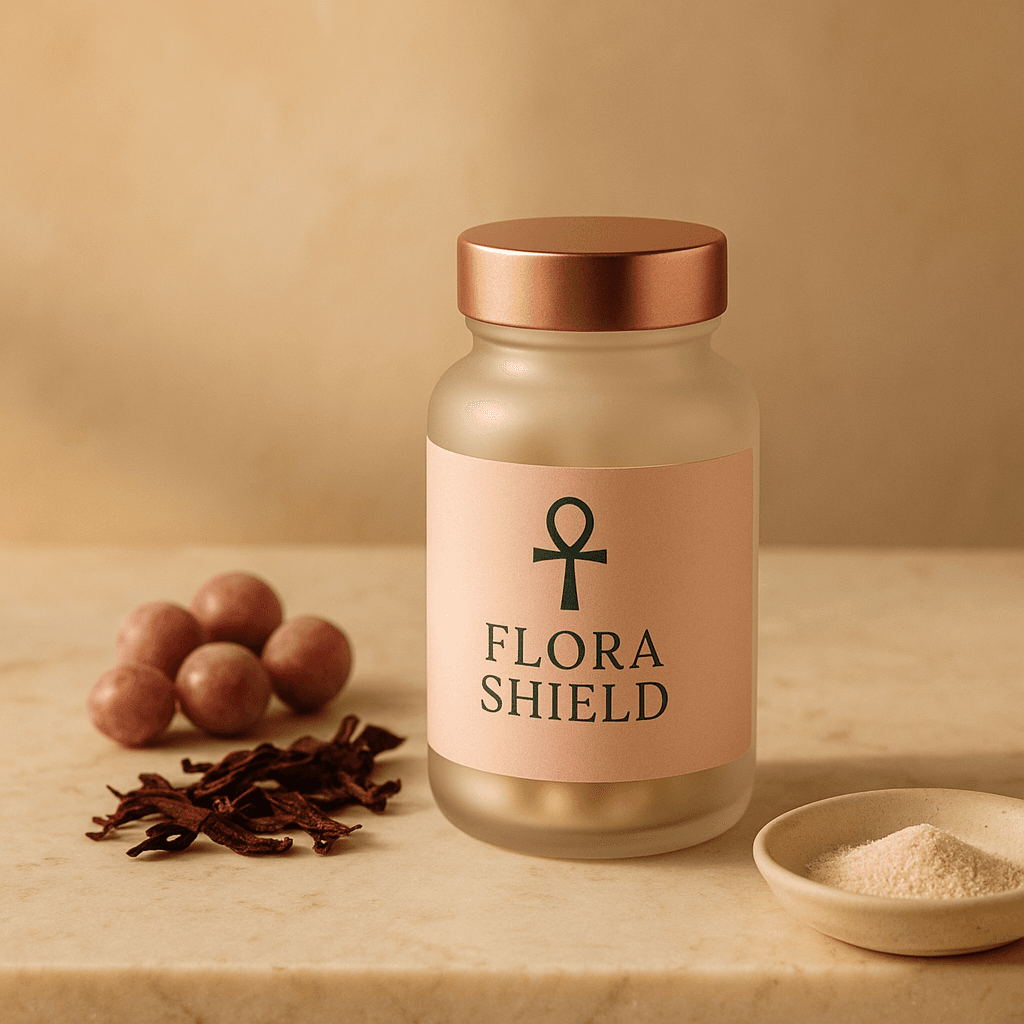
Understanding why strain specificity matters is only useful if it translates into formulation decisions. Flora Shield was designed around the evidence outlined above, combining clinically studied strains at research-supported doses with prebiotic and cranberry support.
The formulation includes 50 billion total CFU, but more importantly, it specifies exactly where those CFU come from: 15 billion CFU of L. rhamnosus GR-1 and 15 billion CFU of L. reuteri RC-14 — the gold standard urogenital combination — plus 10 billion CFU of L. crispatus, the keystone vaginal species. Rounding out the formula are 500 mg of FOS prebiotic fiber and 200 mg of cranberry extract standardized to deliver the clinically relevant PAC threshold.
The total CFU count matters less than the fact that every strain in the formula has a specific, evidence-based reason for being there, at a dose supported by clinical research. That is what separates a strain-specific formulation from a generic CFU number on a label.
Digestive Benefits: More Than Vaginal Health
While the primary rationale for a women's probiotic centers on urogenital health, the Lactobacillus strains in a well-designed formula also support digestive function. This is particularly relevant because many women experience both vaginal health concerns and digestive symptoms — and the two are often connected through the gut-vaginal axis.
IBS and Probiotic Support
Irritable bowel syndrome affects women at roughly twice the rate of men, and specific probiotic strains have demonstrated benefits for IBS symptoms in clinical trials.
Saccharomyces boulardii CNCM I-745, a non-pathogenic yeast, has been studied across five randomized controlled trials for IBS-related diarrhea. It works through mechanisms distinct from bacterial probiotics, including enhancement of brush border enzyme activity and stimulation of secretory IgA production. Systematic reviews have confirmed its efficacy for reducing stool frequency and improving stool consistency in IBS-D patients.
Bifidobacterium infantis 35624 is one of the most rigorously studied single-strain probiotics for global IBS symptom improvement. It produces an exopolysaccharide that modulates the host immune response, shifting the balance from pro-inflammatory to anti-inflammatory cytokines. Notably, the effective dose identified in clinical trials is just 1 billion CFU per day — far lower than the doses used for many other probiotic strains, which underscores the point that more CFU does not always mean more benefit.
The Gut-Vaginal Connection
Research increasingly shows that the gastrointestinal tract serves as a reservoir for the Lactobacillus species that colonize the vaginal tract. Oral probiotics that establish themselves in the gut can continuously reseed the vaginal microbiome through the natural anatomical proximity of the perineal region. This is precisely the mechanism by which oral GR-1 and RC-14 achieve vaginal colonization, and it means that supporting gut health and supporting vaginal health are not separate goals — they are interconnected.
How to Choose a Women's Probiotic: A Practical Guide
Armed with an understanding of strain specificity, here is a framework for evaluating any probiotic marketed to women.
What to Look For
Named strains, not just species. The label should list the full strain designation — for example, "Lactobacillus rhamnosus GR-1," not just "Lactobacillus rhamnosus." If a product lists only the genus and species without a strain name, there is no way to trace it back to specific clinical evidence.
CFU per strain, not just total CFU. A product claiming 50 billion total CFU could contain 49 billion CFU of a filler strain and 1 billion of a clinically studied strain. The Supplement Facts panel should break down exactly how many CFU each strain contributes.
Clinical evidence for the stated benefit. If a product is marketed for vaginal health, the strains it contains should have clinical trial data demonstrating vaginal colonization or urogenital benefits. If it is marketed for digestive health, the strains should have IBS or gut-related clinical evidence. Cross-application claims without supporting data are a red flag.
Enteric coating or delayed-release technology. Probiotic bacteria must survive stomach acid to reach the intestine. Products using enteric-coated or delayed-release capsules give their organisms a significantly better chance of surviving the journey.
Third-party testing. Independent verification of potency (actual CFU at time of expiration, not just at manufacture) and purity provides confidence that the product delivers what its label claims.
Red Flags to Watch For
"Proprietary blend" without strain-level disclosure. This is the supplement industry's way of hiding the fact that a product relies on cheap, generic strains in unknown proportions. Any reputable manufacturer with clinically studied strains will proudly disclose them.
Marketing that emphasizes total CFU as the primary selling point. A 100 billion CFU product with unstudied strains is less likely to help you than a 10 billion CFU product with the right strains at the right doses.
Vague claims without specifying which strains deliver the benefit. Statements like "supports feminine balance" or "promotes vaginal flora" without naming the specific strains responsible are a sign that the formulation was not designed with clinical evidence in mind.
No refrigeration guidance or stability data. Probiotics are living organisms. A product that does not address how it maintains viability through storage, shipping, and shelf life may not deliver live organisms by the time you take it.
Safety: What You Need to Know
Probiotics have an outstanding safety record for the vast majority of healthy adults. The organisms used in commercial probiotic supplements have been consumed in fermented foods for millennia and as supplements for decades. For healthy women, the most common side effects are transient gas and bloating during the first week of supplementation, which typically resolves as your microbiome adjusts.
When to Consult Your Healthcare Provider First
While probiotics are safe for most people, certain populations should discuss supplementation with a physician before starting. This includes women who are immunocompromised due to conditions like active cancer treatment, organ transplantation, or advanced HIV/AIDS. It also includes women with central venous catheters, structural heart disease, or short bowel syndrome.
These are not common situations for the typical supplement consumer, but responsible supplementation means understanding when medical guidance is appropriate.
Shelf Stability Matters
Because probiotics are living organisms, how a product is manufactured, stored, and shipped directly affects whether you receive viable bacteria. Look for products that guarantee CFU counts at expiration rather than at the time of manufacture, use moisture-protective packaging, and provide clear storage instructions. Some formulations require refrigeration while others use shelf-stable technologies — either approach can work, but the product should be transparent about its requirements.
Pregnancy Considerations
Many women are particularly interested in probiotic supplementation during pregnancy. The Lactobacillus strains discussed in this article — particularly GR-1 and RC-14 — have been studied in pregnant populations. A clinical trial specifically evaluating the effects of oral GR-1 and RC-14 on the vaginal microbiota in pregnant women found the strains to be well-tolerated. However, as with any supplement during pregnancy, it is always best to discuss with your healthcare provider.
The Bottom Line
The single most important factor in choosing a women's probiotic is not how many billions of CFU are on the label. It is whether the specific strains inside the capsule have been clinically studied for the benefits you are looking for.
Here is what the evidence tells us:
- L. rhamnosus GR-1 and L. reuteri RC-14 are the most extensively studied probiotic combination for vaginal and urogenital health, with over 25 clinical trials demonstrating oral-to-vaginal colonization and benefits for BV and UTI prevention
- L. crispatus is the keystone species of a healthy vaginal microbiome, producing both lactic acid isomers and hydrogen peroxide for broad antimicrobial protection
- Prebiotic fiber (FOS) selectively feeds beneficial Lactobacillus species, supporting colonization
- Cranberry PACs at 36 mg daily prevent uropathogenic bacterial adhesion in the urinary tract through a mechanism complementary to probiotic activity
- Strain-level identification on a product label is the only way to verify that a probiotic is backed by clinical evidence
- CFU per strain matters more than total CFU count
When you understand strain specificity, the supplement aisle becomes a lot less overwhelming. Stop comparing CFU numbers. Start reading strain names. That is where the science lives.
This content is for informational purposes only and does not constitute medical advice. Always consult a qualified healthcare provider before starting any new supplement regimen, especially if you are pregnant, nursing, immunocompromised, or taking medication.